
Fast Facts | 2026 Lexus ES 350e and ES 500e
⚡ Power: ES 350e uses a 221-hp front motor, while ES 500e adds a 118-hp rear motor for 338 hp combined
🔋 Battery: Both electric ES models use a 74.7-kWh battery pack mounted under the floor
🛣️ Range: ES 350e is manufacturer-estimated at up to 307 miles, while ES 500e is EPA-rated at up to 276 miles
🚀 Performance: Lexus estimates 0 to 60 mph in 7.4 seconds for ES 350e and 5.1 seconds for ES 500e
🔌 Charging: The ES accepts up to 11 kW on Level 2 and up to 150 kW on DC fast charging
⏱️ Fast Charge: Lexus estimates a 10 to 80 percent charge in about 28 minutes
💰 Pricing: ES 350e Premium starts at $48,895 including destination, with ES 500e Luxury topping out at $60,195
Back in 1989, when Toyota officially launched its Lexus premium brand, it had just two models: the LS 400 flagship and the midsize ES 250.b, and while several LS-badged concepts were shown at the Japan Mobility Show last October, it’s unclear when, or if a replacement is coming. The ES, on the other hand, has been a consistent Lexus nameplate from the beginning. For 2026, it's an all-new model, with a choice of hybrid or electric variants. I recently had the chance to drive both, and you can check out my review of the hybrid ES 350h here, but this article is all about the ES 350e and ES 500e electric models.
A Whole New Look
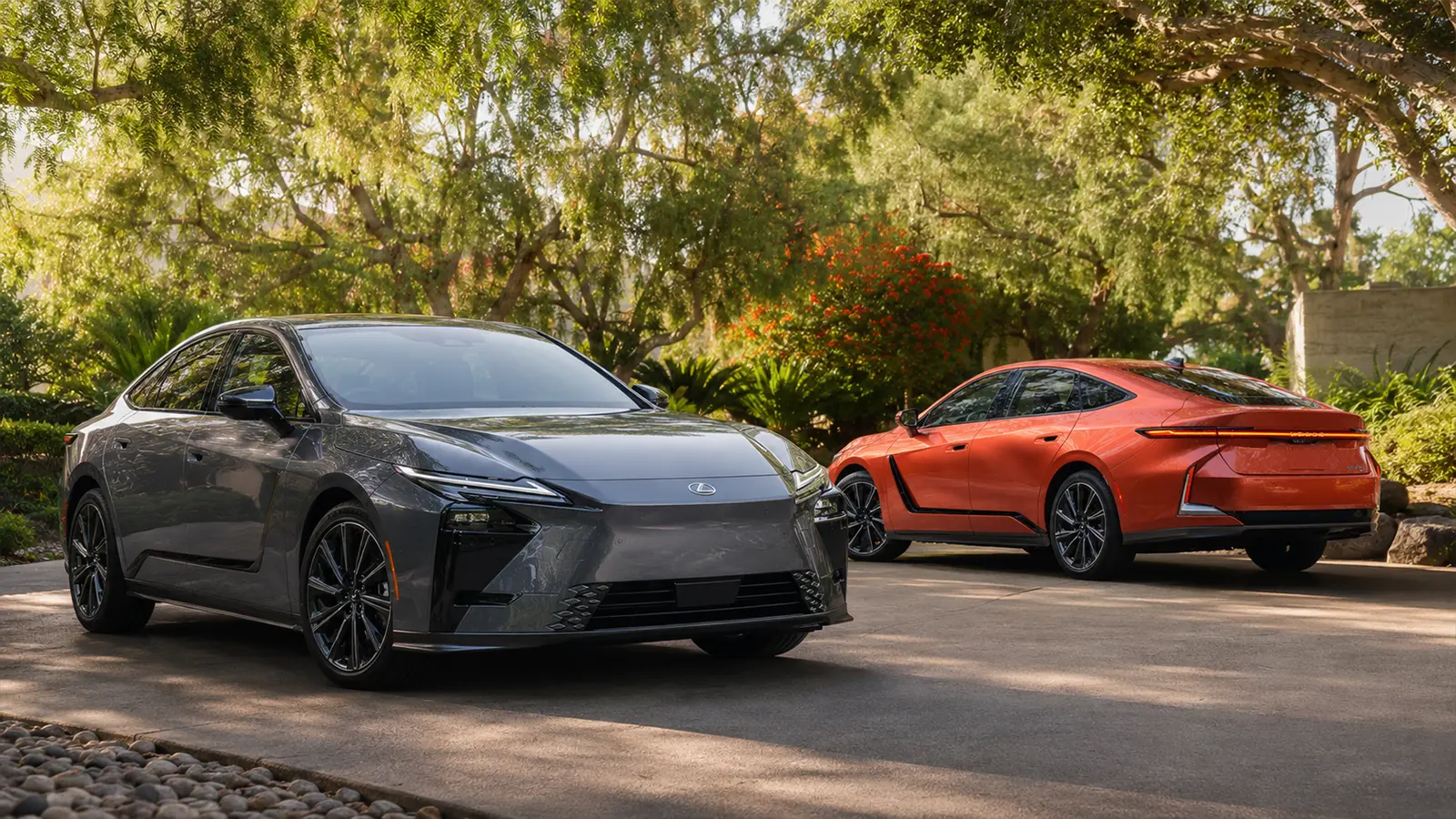
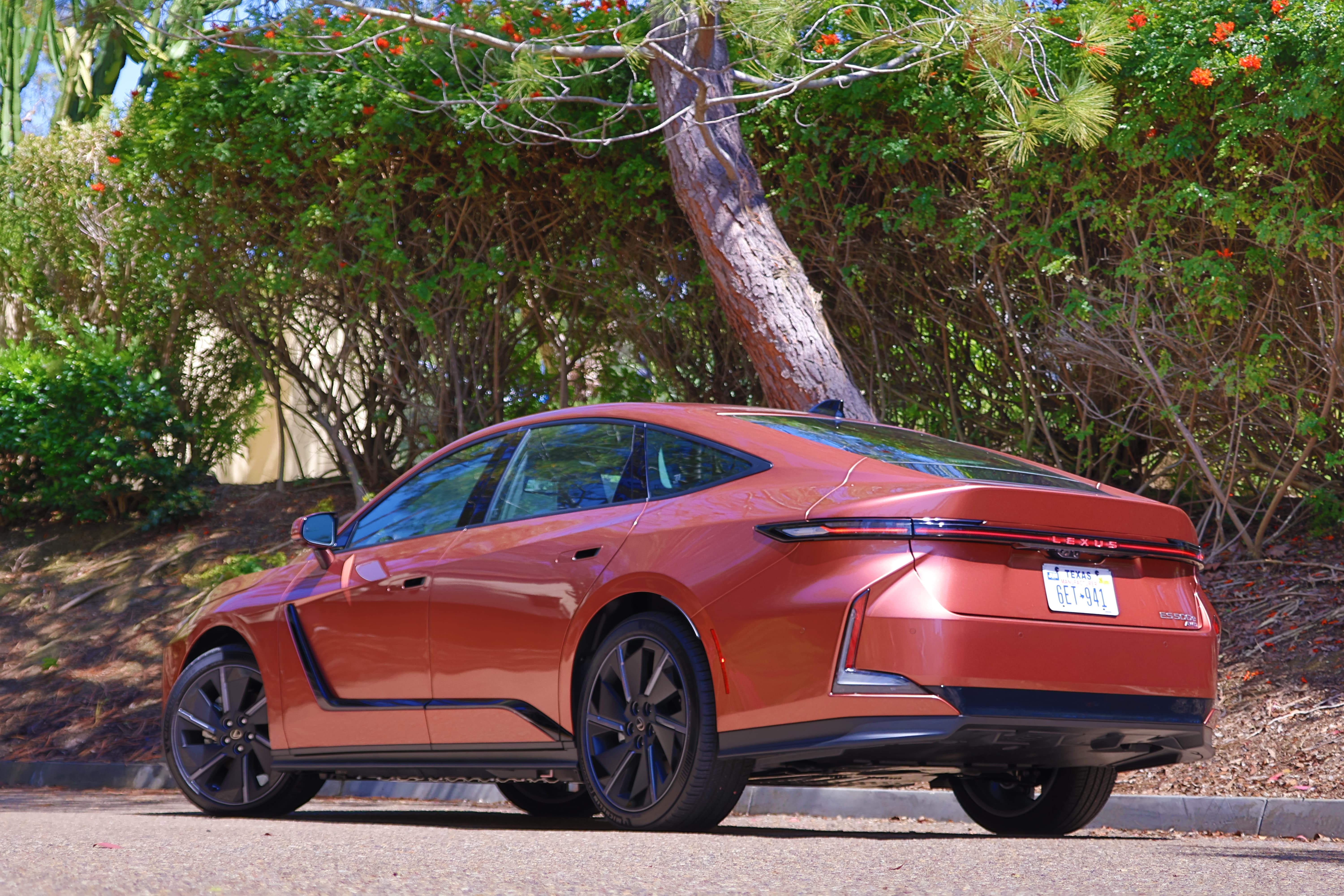
The new ES is the first electric sedan from Lexus or Toyota, and it brings a whole new design direction to the brand. Consider its long-running spindle-grille front end and relatively soft curves gone. In their place is a shape with straighter lines and crisply folded surfaces that evoke the Japanese art of origami.
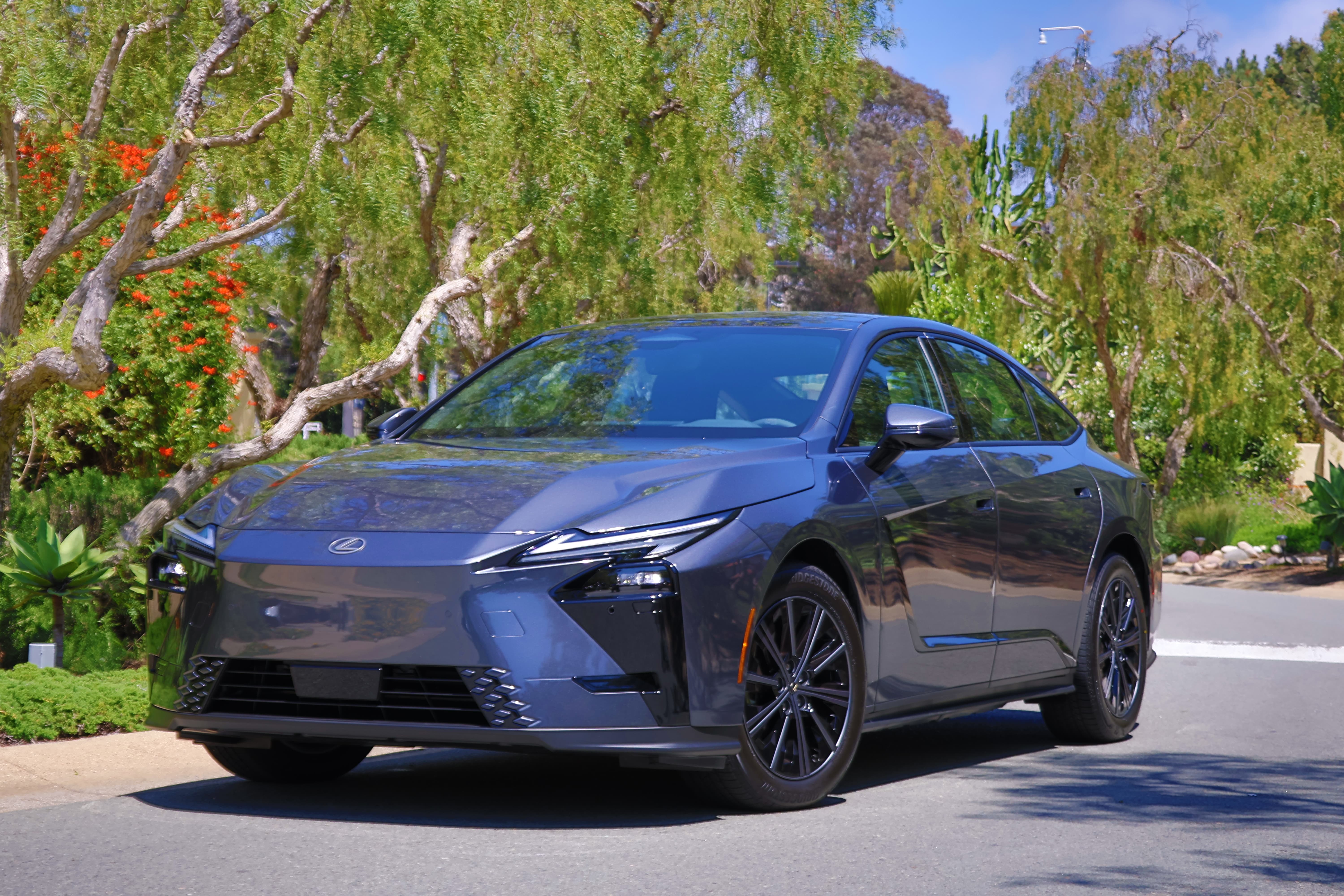
Up front, there's still a faint echo of the old spindle shape in the folds of the fascia and the hood's edges. Since the ES is now only available as a hybrid or EV, it doesn't need as much cooling air through the nose, so the grille has been condensed to just the lower section of the fascia. The L-shaped running lamps familiar to the brand have been retained, but now there's a mirrored, reversed amber version below each white lamp that serves as a turn signal. Small headlight pods sit directly below those.
A broad, black, double-angled accent line runs along each flank. It might look like a side vent at first glance, but it's purely visual - a way to help break up what would otherwise be an unadorned, flat surface. At the rear, the ES takes cues from the 2023 LF-ZC concept, with a slim full-width taillamp bar and the L-shaped turn signals tucked into the lower corners.
Readers weighing the ES against Lexus’ electric crossover lineup can compare the sedan’s calmer mission with the RZ’s sportier refresh in our 2026 Lexus RZ550e F Sport review ➜
At 202.4 inches long, the new ES is 6.5 inches longer than before, 2.2 inches wider, and nearly 4.5 inches taller. The wheelbase stretches 3.1 inches, opening up space inside for passengers. Chief Engineer Kohei Chiashi noted that the size was partly driven by making this an EV platform: the battery pack raises the floor, which pushes the roofline up to maintain passenger volume. The length and width then followed from a desire to keep the proportions sedan-like.
The Driving Space
The clean, crisp appearance carries over to the cabin. Horizontal lines dominate the dashboard, emphasizing the added width, while angled lines on the door panels echo the exterior's lines. Instead of traditional wood trim, the ES offers layered bamboo that is both attractive and renewable, since bamboo is a grass. It's exclusive to the EV.
There’s a 14-inch infotainment touchscreen paired with a 12.3-inch instrument cluster display. The ES is the first Lexus to feature the new multimedia software that debuted on the 2026 RAV4, and it's a significant step forward. A multi-pane view now lets you show navigation alongside the media player and control widgets at the same time. A key addition to the software is EV route planning. The map shows your current driveable range based on battery charge, and if you set a destination beyond this range, it'll suggest charging stops and recommended charging times for the fastest trip.
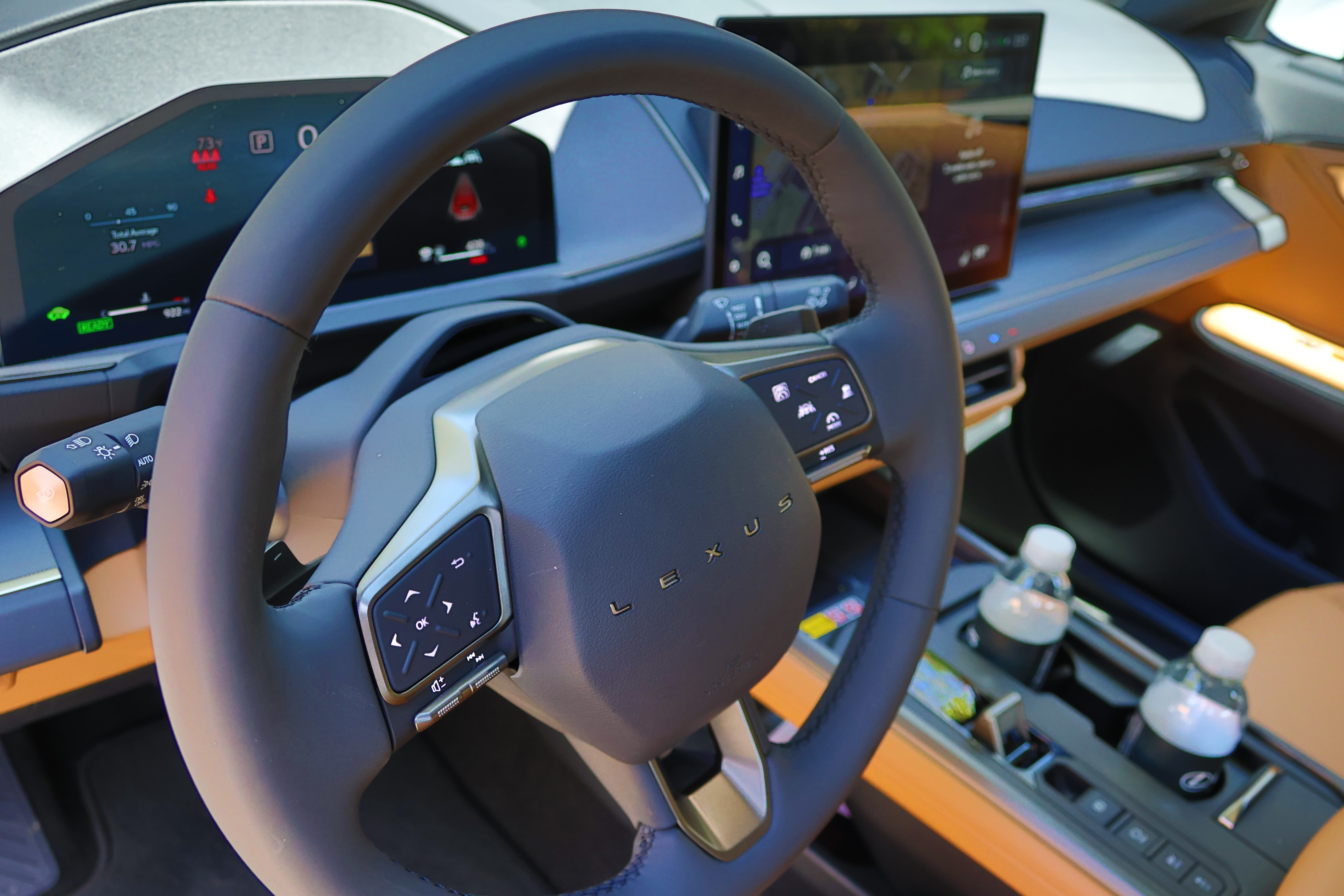
The center console is very clean, with a wireless charging pad at the front (dual chargers are a $75 option on the Luxury trim) and a small toggle for the gear selector that makes it easy to select reverse, neutral, or drive.
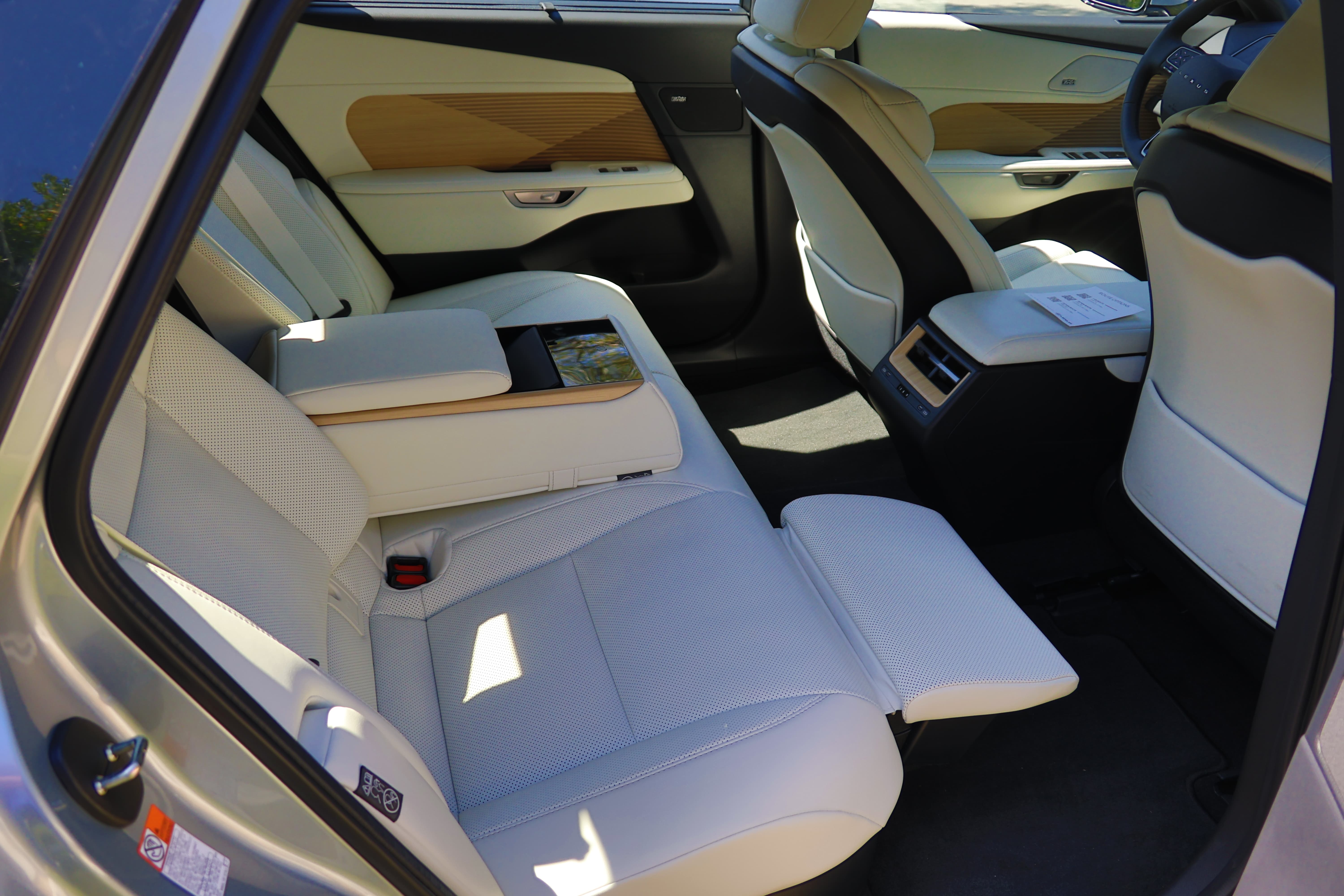
On the Luxury trim, you get a 17-speaker, 1,800-watt Mark Levinson audio system that sounds great. Thanks to the added length, there's plenty of room in the back for rear passengers to stretch out. For those who want the ultimate riding experience, the optional $3,635 Executive package adds heated and cooled rear seats that recline, massage, and even include an extendable ottoman on the right side. A panel on the center armrest lets the right rear passenger push the front passenger seat forward for maximum space. It’s not quite a lie-flat business class plane seat, but it’s a pretty nice way to get around. Despite the increase in overall size, the ES does give up a bit of trunk volume, dropping from the previous 13.9 cubic feet to 13.3 cubic feet. The back seats don’t fold down either, but there is a ski pass-through. If you need maximum space for stuff, the RZ crossover or the upcoming 3-row TZ may be the better choice.
Driving
One reason Lexus and Toyota can offer seven different EVs by the end of this year is a shared hardware platform under different body styles. The ES has the same 74.7-kilowatt-hour battery under the floor with a 221-horsepower front motor for the front-wheel-drive (FWD) ES 350e that you’ll find in the RZ and Toyota bZ, bZ Woodland and C-HR. Opting for the all-wheel-drive (AWD) ES 500e adds a second 118-horsepower rear motor, bringing the combined system output of 338 horsepower. Lexus estimates 0-60 in 7.4 seconds in the ES 350e and 5.1 seconds in the ES 500e, and while I didn’t officially time either one, that felt about right according to my backside accelerometer.
If the ES 500e’s AWD system is the main draw, our best AWD electric cars guide helps place it against other all-weather EV options ➜
I drove the ES350e first. The instant response of the electric drive makes it feel quicker than it is, and Lexus has tuned it for smoothness so it doesn’t jerk drivers and passengers around. Without an engine to mask road noise, anything that makes sound in an EV needs special attention. And the Lexus team has crafted a very refined personality. This car is absolutely smooth and quiet at all times.
While the ES isn’t a sports car, the steering is nicely weighted and goes right where you point it. The ES 500e is noticeably quicker, but unless you really need AWD capability for bad weather, that speed isn’t really necessary for a big luxury sedan like this. Interestingly, Lexus tuned the suspension differently between the two: the 350e feels a bit softer, not in a floaty old-fashioned land yacht way, but more compliant, while the 500e felt a bit more buttoned down, in keeping with its quicker performance. Which one is right for you really comes down to personal preference.
On a loop mixing urban, highway, and mountain roads, the 350e showed an impressive 4.2 miles/kWh on the trip odometer, while the 500e got 3.7.
The Bottom Line
The electric 2026 Lexus ES comes in two trim levels - Premium and Luxury - each available as FWD 350e or AWD 500e. At $48,895 MSRP, including $1,395 destination charge, the ES 350e Premium is actually the most affordable ES in the lineup, undercutting the hybrid ES 350h by $2,200. Adding the rear motor for AWD costs $3,000 on either trim, with the top ES 500e Luxury topping out at $60,195 MSRP.
Range-wise, the ES 350e is manufacturer-estimated at 307 miles on standard 19-inch wheels, or 292 miles on the 21-inch wheels. The ES 500e comes in at an EPA-rated 276 miles and 272 miles, respectively, which are still quite respectable numbers. At home on a 240-volt Level 2 charger, the ES accepts up to 11 kW and reaches a full charge in about 7 hours. On the road, it charges at up to 150 kW, going from 10 to 80 percent in about 28 minutes. And with a native NACS port, it's compatible with most Tesla Superchargers.
Crossovers may be the dominant vehicle type in the U.S. right now, and Lexus has those covered too, with the RZ and upcoming TZ. But sedans still account for nearly a quarter of U.S. vehicle sales. More than pickups, actually, which account for about 15 percent. It’s great to see Lexus offering an attractive, roomy electric sedan that's enjoyable to drive.
⚡More Electric Luxury Picks
Audi A6 e-tron Sportback Review A Hidden Gem Among EV Sedans
Audi’s sleek electric sedan brings long-range refinement and premium design, making it a natural cross-shop for the electric Lexus ES.
Can the 2025 Mercedes-Benz EQE 500 Replace the E-Class
The EQE 500 gives shoppers another luxury EV sedan option with strong comfort, tech, and electric performance.
2025 Lucid Air Grand Touring Review One of the Best Luxury Sedans Available
The Lucid Air sits higher in the luxury EV sedan world, but its range, space, and refinement make it a useful premium benchmark.